
Food insecurity affects tens of millions of Americans each year. Recent national estimates show that roughly 47-48 million people in the United States experienced food insecurity, including about 14 million children. In Harvesters’ service area, 1 in 7 individuals, and 1 in 6 children, is food insecure. However, depending on where you live, this can look wildly different.
Though hunger exists in every county across the country, geography still matters when examining how hunger sows up.
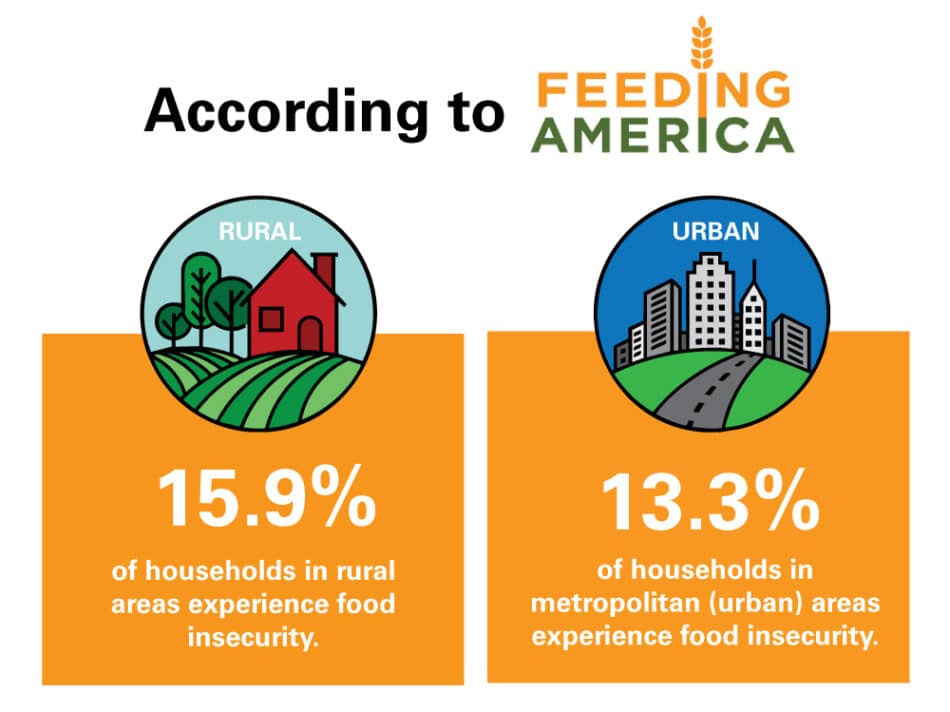
According to Feeding America. 15.9% of households in rural areas experience food insecurity. Consequently, 13.3% of households in metropolitan (urban) areas experience food insecurity.
Though hunger is widespread in both urban and rural America, the circumstances surrounding it differ significantly.
One of the most striking ironies in the fight against hunger is that some of the highest food insecurity rates occur in rural areas that produce much of the nation’s food.
Why is that? Many rural communities face limited access to full-service grocery stores. Residents may live miles away from the nearest supermarket, forcing them to travel long distances for food. Without reliable transportation, accessing affordable and nutritious food becomes extremely difficult.
Small convenience stores may exist locally, but they often offer limited healthy options and higher prices. Families may have to drive long distances to reach grocery stores, food pantries, or social services. When gas prices rise or vehicles break down, food access can quickly become a crisis.
While rural areas often experience higher rates of hunger, the largest number of people facing food insecurity live in urban areas simply because cities contain more residents.
Urban hunger is therefore often more visible, but not necessarily any easier to address.
Housing costs are one of the biggest drivers of urban food insecurity. In many cities, families must dedicate a large share of their income to rent, leaving less money available for groceries.
Despite having more stores overall, many urban neighborhoods lack nearby grocery stores that sell fresh and affordable food, creating food deserts.
Residents may rely on convenience stores, fast food restaurants, or small corner stores that offer limited healthy options. Food insecurity tends to be concentrated in neighborhoods with high unemployment, limited transportation options, and systemic barriers to opportunity.
Despite their differences, urban and rural communities share many of the same root causes of hunger.
One of the most important factors is income. Many households experiencing food insecurity are working families whose wages are simply not enough to cover the cost of living. Feeding America estimates that 70% of people facing hunger live above the federal poverty line, meaning they often make just enough to not qualify for assistance programs but still struggle to afford food.
Food prices have risen significantly in recent years, increasing the pressure on household budgets. Even small increases in grocery costs can push families into food insecurity.
Medical bills, childcare costs, and transportation expenses can also divert resources away from food. For households already living paycheck to paycheck, unexpected expenses can quickly lead to food shortages.
Harvesters is dedicated to serving our neighbors in both the rural and urban communities.. Though we are headquartered in Kansas City, a fairly large metropolitan area, we cover 27 counties across Kansas and Missouri, and routinely serve people in all of these counties.
It is our goal to make sure that no matter where someone lives, they have equal access to consistent, nutritious food, and we have partners in each county that best know their communities and their needs. We constantly seek to improve our data on where the highest levels of hunger exist and then aim to distribute our resources accordingly.
If you are currently in a tight spot and could use food assistance, our Food Locator tool can help you find the pantry, mobile distribution site, or other service provider closest to you, whether you live in one of the larger cities we serve or in a rural area. Don’t hesitate to reach out for help!