
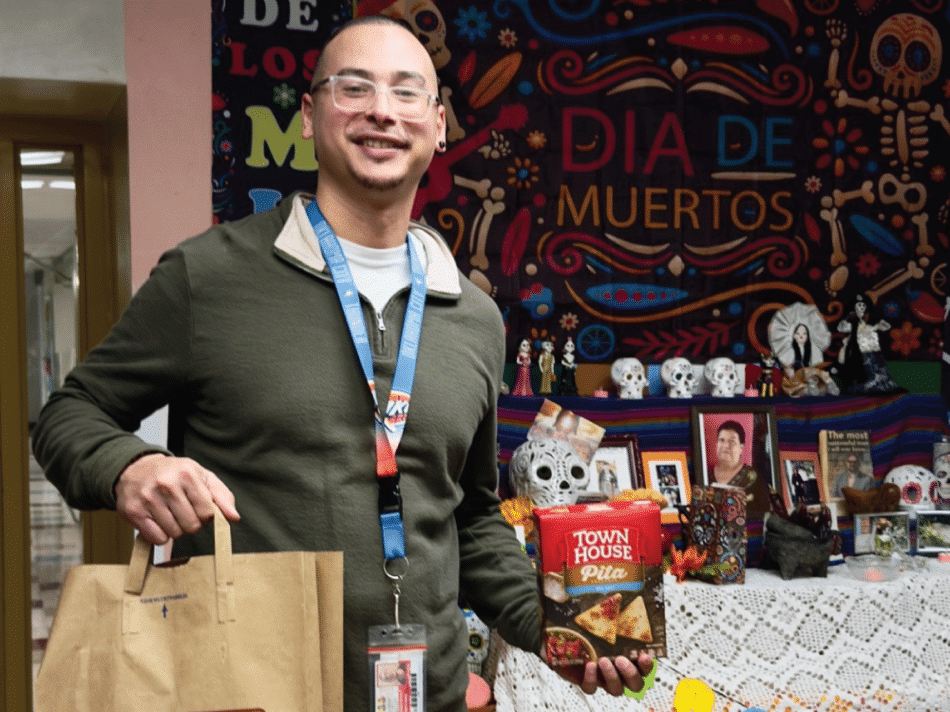
Whenever Jesse Lopez unlocks the doors to the school pantry, teens at Guadalupe Centers High School get the basics they need to succeed.
Assisting food-insecure students can look like a bottle of water, “emotional support” Hot Cheetos, dibs on a frozen dinner or grocery bags filled with fresh produce and shelf-stable items ready for pickup at the end of the school day. All of the 470 Hispanic high school students at Guadalupe Centers qualify for free breakfast and lunch, and some families also qualify for SNAP. Nearly 60% of the students are English Language Learners.
Forty to 50 students per week are selected to receive a bag of food, and any student who helps fill the bags can earn community service hours. Between mid-August and mid-November of 2025, the school pantry distributed 22,000 pounds of food.
“The thing I love about Guadalupe is it’s just normal for them, right? It’s just built into the (school) culture. They’re like, OK, cool, we’ll get our food bags…it’s so ingrained here they don’t even think twice about it,” said Lopez, a SparkWheel student support coordinator at the Kansas City charter school located at 1524 The Paso.
SparkWheel is a non-profit agency based in Lawrence, Kan., working to equip 30,000 economically disadvantaged students in Kansas and Missouri for academic success, which includes connections to a steady supply of food, hygiene products, clothing and laundry detergent. The organization also can tap into emergency funds to help pay household necessities, such as a utility bill, or medical needs, like an emergency visit to the dentist.
“Food is just a huge part of what we do,” said Malissa Martin, SparkWheel’s president and CEO
The partnership with Harvesters started three years ago. SparkWheel currently coordinates 40 pantries in Kansas City Public Schools and charter schools, serving more than 3,200 unique families and distributing an estimated 216,755 pounds of food annually.
Each school pantry looks a bit different depending on space available. Access to cold storage and freezer space can limit the types of items available. The Guadalupe Centers school pantry is a few steps from the cafeteria in a high-traffic hallway with culturally relevant murals by student artists and a Dia de los Muertos altar honors family members with candles, photographs and some of their favorite foods.
On Mondays, an electronic form is sent out to assess need for the week. Teachers and support staff can recommend a student, or families can reach out to counselors. On Thursdays, Lopez and two staff members drive a school van to the Harvesters warehouse to fill it with nutritious food.
The food is packed into donated Price Chopper paper grocery bags for students to pick up at the end of the day. For easy carry, the bags have handles, and, to reduce the stigma, brown paper offers a discreet way to take the food home.
Whenever possible, the weekly grocery bags include culturally relevant foods, such as containers of chopped onions and tomatoes, shredded lettuce, mangoes, dry or canned beans, and pasta.
“The partnership with Harvesters put school food pantries on steroids as far as what’s available and the amount that is available,” Martin said, adding SparkWheel’s future goals include adapting the model for rural districts without a viable regional food bank partner.
As prices rise at the grocery store, SNAP cuts take effect, and rising anti-immigrant sentiment increases, “more and more people are having a need to ask for food as things intensify within our community,” Lopez said.
But the Guadalupe Centers food pantry is helping to alleviate fear for students and families who may not feel safe seeking out external food pantries or mobile distributions.
“I think that is a huge deal right now, and so when you say, hey, we have these items that we want to just give to you for free because we care about you and we want your family to be well, that’s a hard message sometimes for families to hear and believe,” said Crystalle Green, programs director for SparkWheel.