
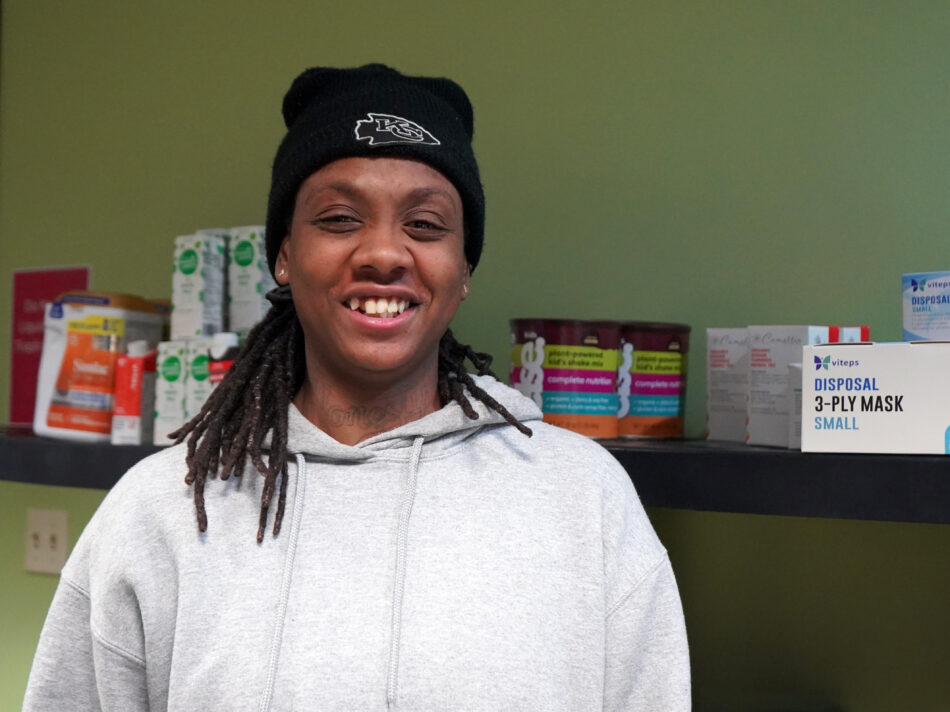
If you were to spend more than just a few minutes with Lula, she would likely have you laughing. She has a jovial spirit and an easy demeanor. But, don’t let that fool you. Lula is tough. At 31, she’s already experienced her fair share of difficulty, and she’s open about the challenges she’s had to overcome.
“I didn’t come from an easy area,” Lula says. “I came from a neighborhood where, you know, sometimes we got food stamps. Sometimes we didn’t. Sometimes, the lights are on. Sometimes they’re not. The longest we went without food was probably two or three days.”
Like many in her community, Lula was left with few options on how to make it through the day without resorting to self-destructive behaviors. In her mid-20s, she was arrested and ended up serving 7 years in prison. Incarceration affects everyone differently, but it is inherently a lonely and isolating place. As fate would have it, Lula was still incarcerated as the COVID-19 pandemic swept the U.S. and the rest of the world. Fear and confusion, especially in those early days, were unavoidable. But for the prisoners already cut off from the outside, it was tenfold.
“They left us with no guards,” Lula recounts. “They weren’t answering our buttons. We had no toilet paper. We were in there probably for about 10 to 12 hours before we got an answer. So, you know, we’re panicking because they’re not really telling us what’s going on, and then they’re popping all the doors and telling us to throw everything out from covers to the extra clothes, blankets, and books.
We finally got a chance to talk to our loved ones, like, two and a half weeks later. It was pretty scary and traumatizing.”
Lula made it through these trials, and through the remainder of her sentence, with a resolve to turn her life around and find stability. Upon release, however, she found herself in a world that was quite different than when she entered prison. Not only had COVID shaped the way we interact, but increased automation and food prices became another layer to feeling alienated.
“Everything was very confusing,” she says. “First off, you know, I’m pulling up at the McDonald’s, and there’s a robot talking to me. I couldn’t understand none of that stuff. Technology had advanced, and it took a toll on me. And, going into the stores and wanting to buy food, and bread went from, like, $0.99 to $5.89. Everything was different.”
Lula realized that she needed help navigating this new reality, and she found it at one of our Partner Agencies: Second Chance Risk Reduction Center.
Second Chance offers an array of services to help individuals like Lula on their journey. They provide job skills training, physical and mental healthcare access, access to educational services to get their GED/Diploma or pursue higher education, interview skills coaching, and transportation assistance.
Harvesters helps to bolster Second Chance’s programming by stocking their on-site food pantry. Second Chance is all about removing barriers for people reentering society to succeed, and food is a big piece of that. Lula shared that she is incredibly impressed with the quality of items at her disposal while she’s shopping.
“It’s like, real food that can help me get through the next week or two,” she says. “They give water, sodas, juices, vegetables, salads, cheese. You know, chicken strips and chicken nuggets and pizzas and bags of fries and whole turkeys. It’s all the protein and calories and healthy things that you need to be able to survive. They even got little sack lunches and bags to take to work or school.”
Lula grins as she runs through a list of things that have changed since enrolling in the Second Chance program. She has friends in the program who support her and have her back as she does this difficult work. She’s been afforded the chance to dive deeply into working on her mental health and has gained a host of coping skills to better regulate her emotions. And, professionally, she’s working toward her CDL license. Going from almost a blank slate to a brand new life isn’t easy, but the team at Second Chance are amazing at helping their participants not get overwhelmed.
“My case manager calls it an elephant, and you can’t eat an elephant in one bite, right? And so, in order to eat that elephant, we gotta eat it in pieces, and so she gives me a to-do list. I have from that day until the next time that I come and see her to have that list completed. I’ve been with the program almost a year now, and, I mean, that elephant is getting smaller and smaller.”