
Dave Neely’s physician didn’t like the results of a routine blood test. A bone marrow biopsy confirmed Dave’s recent fatigue was due to leukemia.
To get ready for a grueling bone marrow transplant that wipes out the immune system, his care team at the University of Kansas Cancer Center recommended eating a more balanced diet, including whole grains, protein, healthy fats, fruits and vegetables.
But Dave, a 69-year-old retiree, relies solely on social security benefits to make ends meet while grocery prices have risen nearly 30% in the last five years, according to the Bureau of Labor Statistics.
To help boost his nutrition, Dave qualified for NOURISH (Nutrition Outreach in Systems of Healthcare), a five-year, $4 million clinical trial funded by the National Institutes of Health. The clinical trial seeks to improve health outcomes for the 13% of blood cancer patients undergoing transplant and cellular therapy who struggle with food insecurity.
“That means they either run out of food before the next paycheck, or they’re concerned they do not have enough access to food,” said Dr. Anthony Sung, director of the Center for Survivorship and Patient-Oriented Research and professor of hematologic malignancies and cellular therapeutics at KU Medical Center.
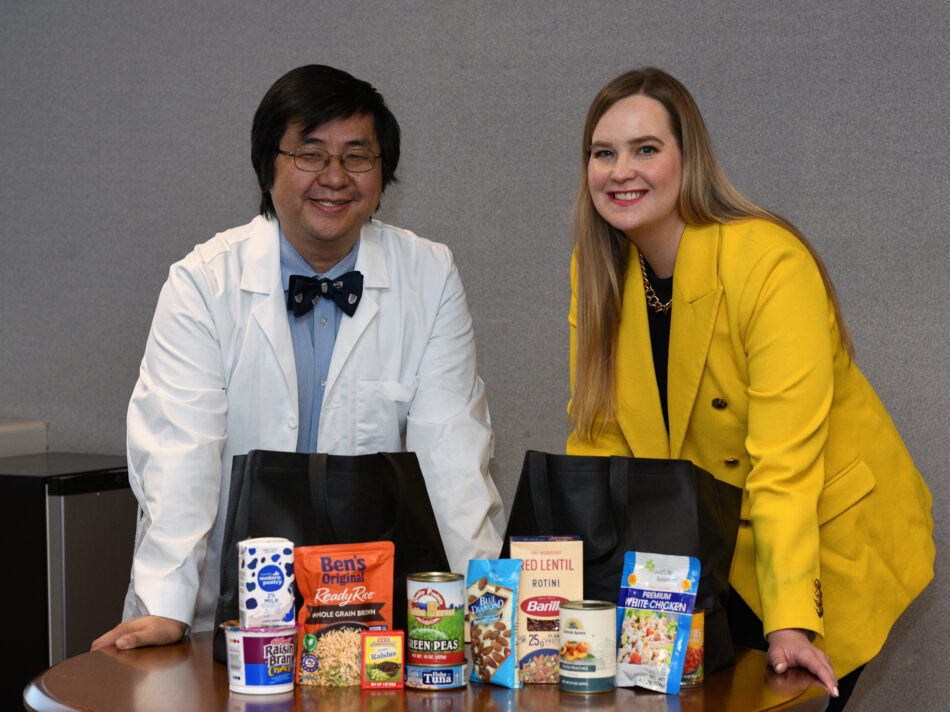
Through a partnership with Harvesters, Dave receives free bags of shelf-stable groceries during his clinic visits. The four prototype bags take into consideration each patient’s personal preferences, allergies, special diets for diabetes or heart conditions, and cultural or religious needs.
Patients also have access to a website offering recipes that incorporate the food bag items, cooking videos by dietitians, nutrition education on how to navigate common side effects of cancer treatments such as loss of appetite, and a food pantry locator.
“It’s really been helpful as far as finishing off the meal,” said Dave, who lives in Topeka with his wife. “Before we might just have a hamburger or a sandwich or something, but now we can add this other stuff, and it’s actually more of a complete meal, more balanced.”
The trial focuses on getting nutrition to transplant and cellular therapies patients because they are already at higher risk of malnutrition. Better nourishment going into treatment also can help avoid intravenous nutrition interventions that are more costly and often less effective.
Although clinicians were previously aware social and economic status indicates a risk for food insecurity, “they weren’t asking their patients about it because they didn’t really know how to approach it, and then how to actually mitigate food insecurity if they identified it,” said Anna Arthur, PhD, MPH and assistant professor of dietetics and nutrition at KU School of Health Professions.
The food bags offer a convenient and discreet way for patients to access the nutrition they need for a month before transplantation through the first year of recovery.
“They’re already coming into our clinics to get their care, sometimes several times a week. Let’s just give them food as they’re leaving, and not just food, but working with Anna and others, making sure that it’s good food for them that will support them during this strenuous time,” Sung said.
Dave is among the three quarters of the patients who must travel more than an hour for treatment. Patients who live more than 30 minutes from the hospital are required to relocate to temporary housing for the initial two to three months after transplantation to monitor possible complications. However, the need to uproot patients removes them from their community resources, such as food pantries and other familiar sources of support.
“We need to care for the entire patient, and whether that’s bringing in dietitians to care for their nutrition needs, bringing in physical therapists to help with their physical functions, social workers to help their financial toxicity and other challenges, we want to make sure that we are meeting all of our patients’ needs rather than just simply giving them drugs,” Sung said.
The groundbreaking KU Cancer Center-Harvesters partnership has led the way for other trial participants — Duke Cancer Center, Stanford Cancer Institute and Memorial Sloan Kettering Cancer Center — to forge similar partnerships with food banks in their regions.
When the trial is over, Sung and Arthur hope they have helped to create an institutional system that will continue to deliver relief for all food-insecure cancer patients when the trial is over.
“We do not know how to source foods. We do not know the logistics involved in putting everything together,” Sung said. “We know how to care for our patients, and we can provide recommendations for our patients, but we can’t provide the food, and that’s the essential gap that our patients need to address. Harvesters is filling that role.”