
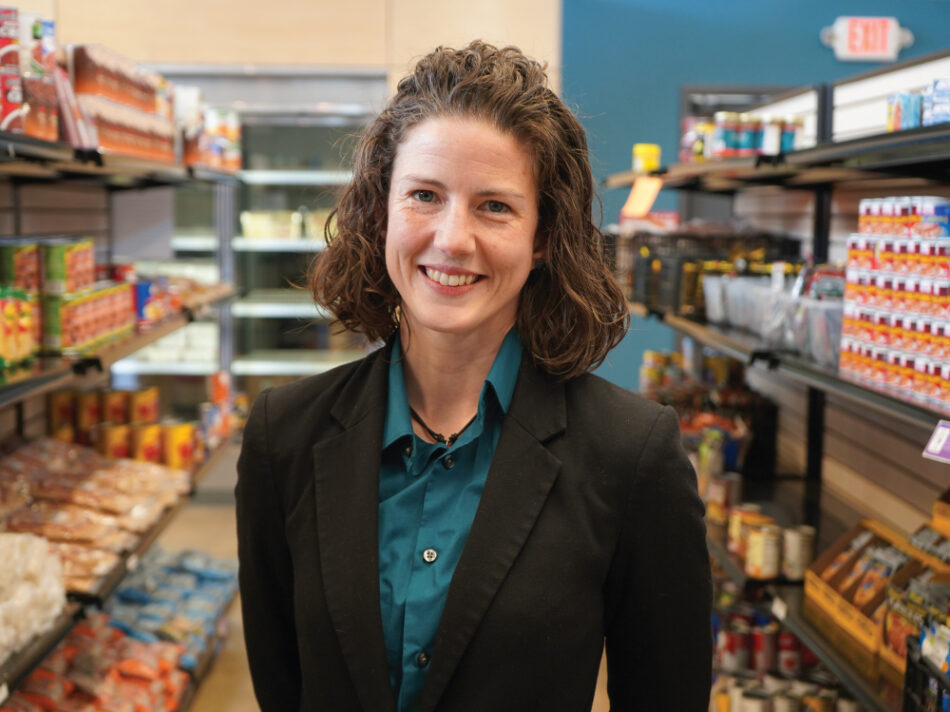
“These are our nation’s next generation architects, artists, engineers and entrepreneurs, and if they’re pursuing higher education to build a better life for themselves, but they don’t have confidence in where their next meal is coming from, how can we expect them to be focused on their studies? The stress of that is phenomenal,” said Shelly Williams, the Morrison Family Director of Cats’ Cupboard at Kansas State University.
College hunger is real, but thankfully, Harvesters’ partner, Cats’ Cupboard is available to help students at K-State who are experiencing food insecurity.
An average of 200 students a day stop by the pantry, which is open 10 a.m. to 6 p.m. Monday through Thursday and 10 a.m. to 2 p.m. on Friday. Students enrolled in at least 1 credit hour per semester are eligible to shop once a day and university employees may shop on Thursdays.
“Prior to taking this role, I didn’t realize that such a high percentage of university students were food insecure, and it put things into perspective for me, because I was a non-traditional student, and first-generation college student, says Williams. “I graduated in 2014, many years before Cats’ Cupboard began, and my family could have used a resource like Cats’ Cupboard.
Now, I feel very privileged to provide students with the services I wish I would have had access to.”
Half of the products displayed on the Cats’ Cupboard shelves are supplied by Harvesters. The pantry layout looks similar to a grocery store: a well-stocked produce department, aisles of cans and boxes, expanded freezers and coolers for both frozen items, including meat, and fresh dairy products. There’s also a section for students with special dietary needs. There are hygiene products, gently used kitchen items and seeds for starting a garden. Birthday cakes are available on request.
A recent Cats’ Cupboard survey found students take home an average of 13 products and 91% said access to food and hygiene products has improved their overall well-being.
“I have conversations with people all the time where you ask, ‘What is your definition of food insecurity, and are you food insecure?’ and they’ll often say no. Just like I would have (when I was a student). But then, when they talk about their daily lives and daily routines and they share some of their hurdles and struggles, you learn they are worried about where their next meal is coming from and they have anxiety around their income stretching far enough to purchase food, and that is, in its essence, food insecurity.”